


The Impact of Legal Tech Consolidation: What It Means for Firms and Clients

- Why did this take so long?
- Why did the cost change?
- Why does every update require another email?
How Law Firm Technology Became Fragmented
It happened because they made reasonable ones at different times, for different needs.
- A document management system was implemented to organize files.
- A billing system followed to track time and expenses.
- Research tools became essential.
- Collaboration platforms were added.
- More recently, AI tools entered the mix.
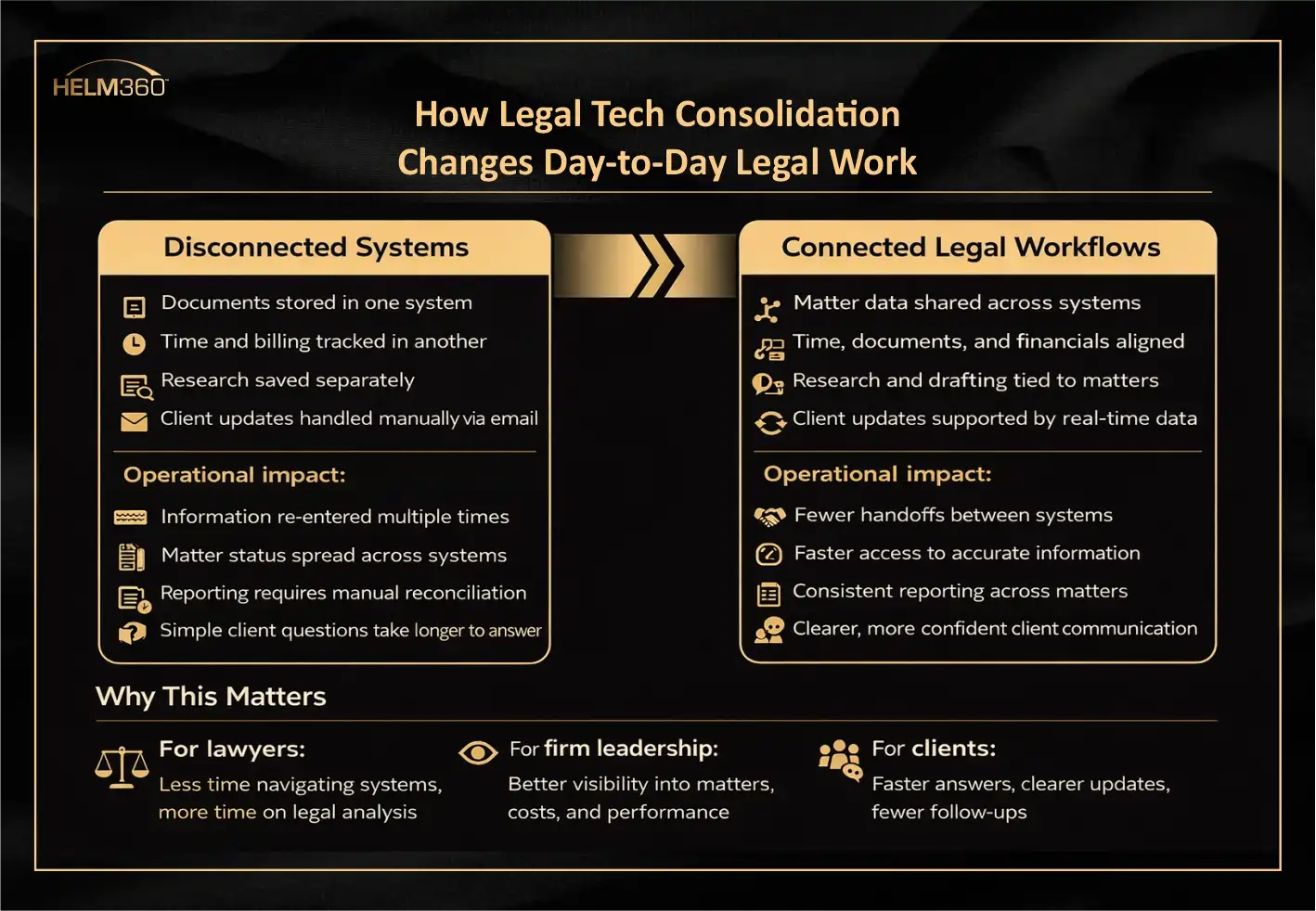
- Information is entered multiple times
- Reports are rebuilt manually
- Lawyers rely on email and spreadsheets to connect systems
What Legal Tech Consolidation Actually Means
- Fewer disconnected tools
- Better data flow between systems
- Less manual coordination by people
Many firms are moving toward integrated platforms and partner-led ecosystems, rather than isolated point solutions. According to Thomson Reuters’ analysis of consolidated legal technology stacks, firms that reduce fragmentation gain clearer visibility into matters, costs, and performance without requiring lawyers to change how they practice law.
Why Consolidation Is No Longer Optional
1. Clients Expect Clarity, Not Extra Follow-Ups
2. AI Exposes the Limits of Fragmented Systems
When documents, time entries, financials, and research live in separate systems, AI has no consistent view of a matter. The result is limited or inconsistent output that firms struggle to rely on. Guidance on the legal AI adoption curve shows that firms see meaningful value when AI is embedded into existing workflows rather than added as a standalone tool. In practical terms, AI adoption forces firms to address fragmentation. Without integration, AI cannot scale responsibly or deliver real value.
3. Fragmentation Increases Security and Compliance Burden
How Consolidation Changes Daily Operations Inside Law Firms
1. Less Time Managing Technology
2. Better Visibility Across Matters
- where matters currently stand
- how time and resources are being used
- what is driving changes in cost or scope
3. A More Sustainable Lawyer Experience
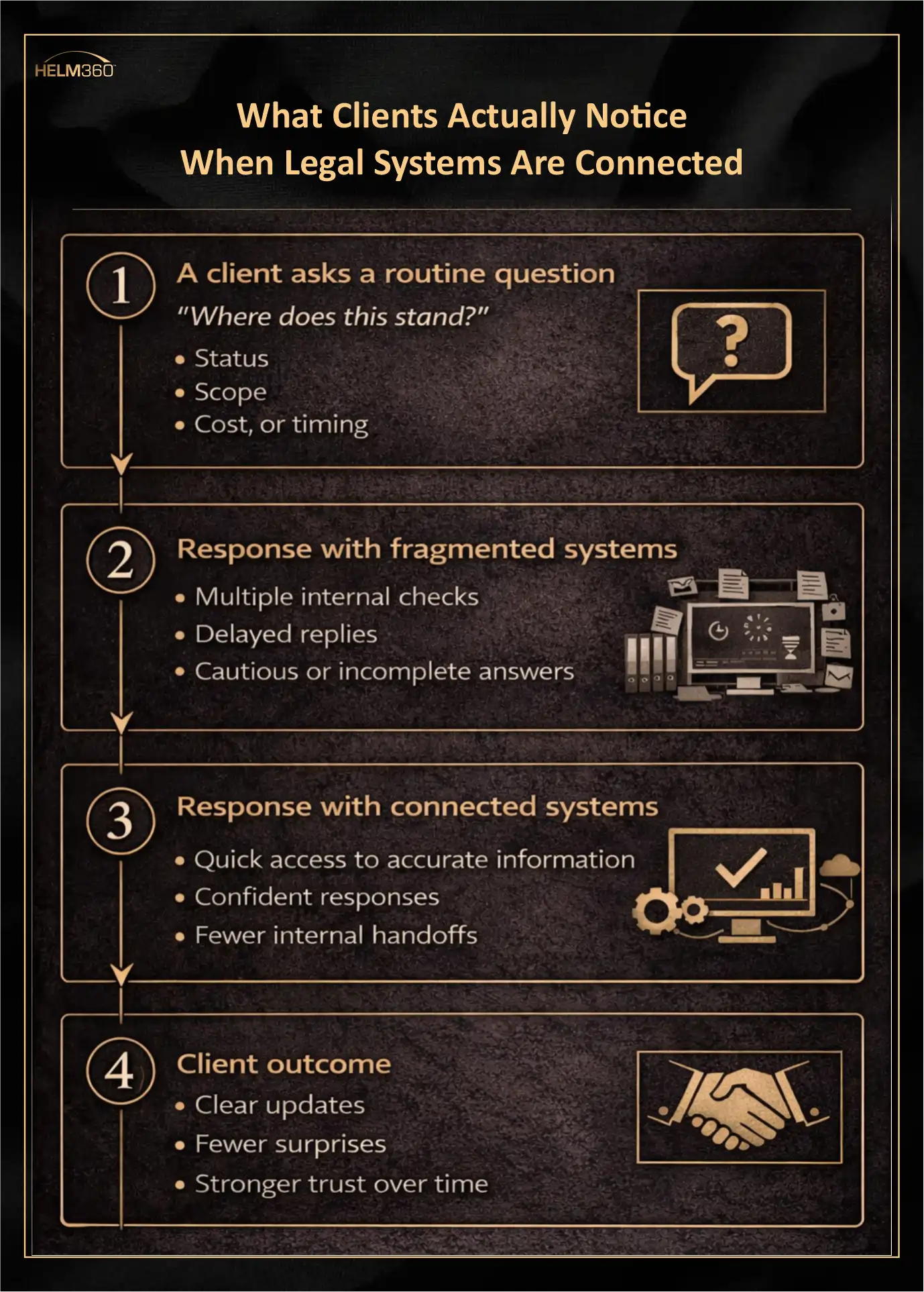
What Clients Experience When Firm Systems Are Connected
- faster responses to routine questions
- clearer and more predictable billing
- fewer follow-up emails asking for status or clarification
Where Strategic Partnerships Fit Into Consolidation
Programs like the Helm360 Alliance Partner Program support this approach by bringing together vetted legal technology partners. The emphasis is on alignment and interoperability, helping firms build connected environments where systems and services work together in practice, not just on paper.
How Firms Are Approaching Consolidation Successfully
Firms that navigate consolidation effectively tend to follow a consistent approach:
- They start with client and business outcomes, not individual tool features
- They prioritize integration and governance early
- They plan for adoption and change management, not just technical implementation