Legal Technology Trends Law Firms Should Pay Attention to In 2026

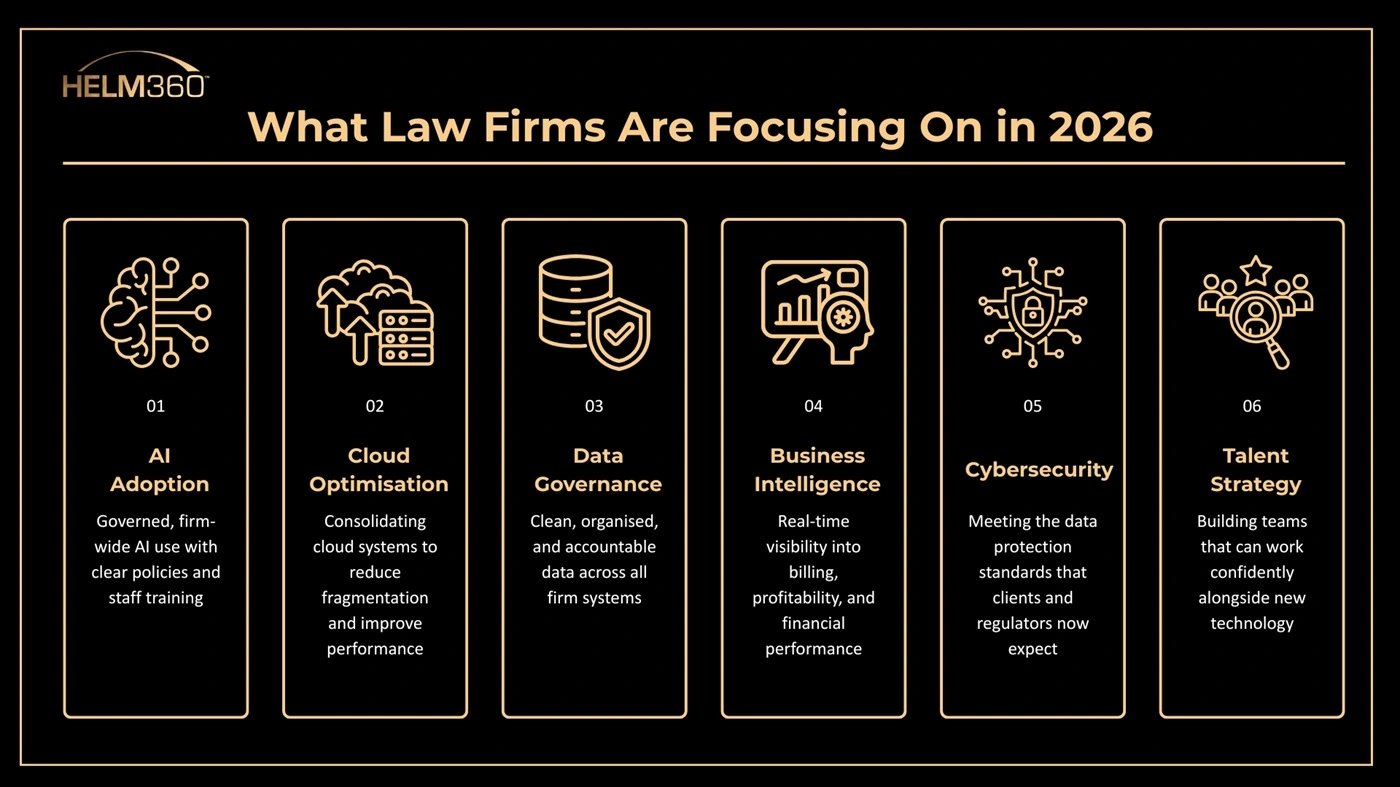
1. AI Adoption in Law Firms
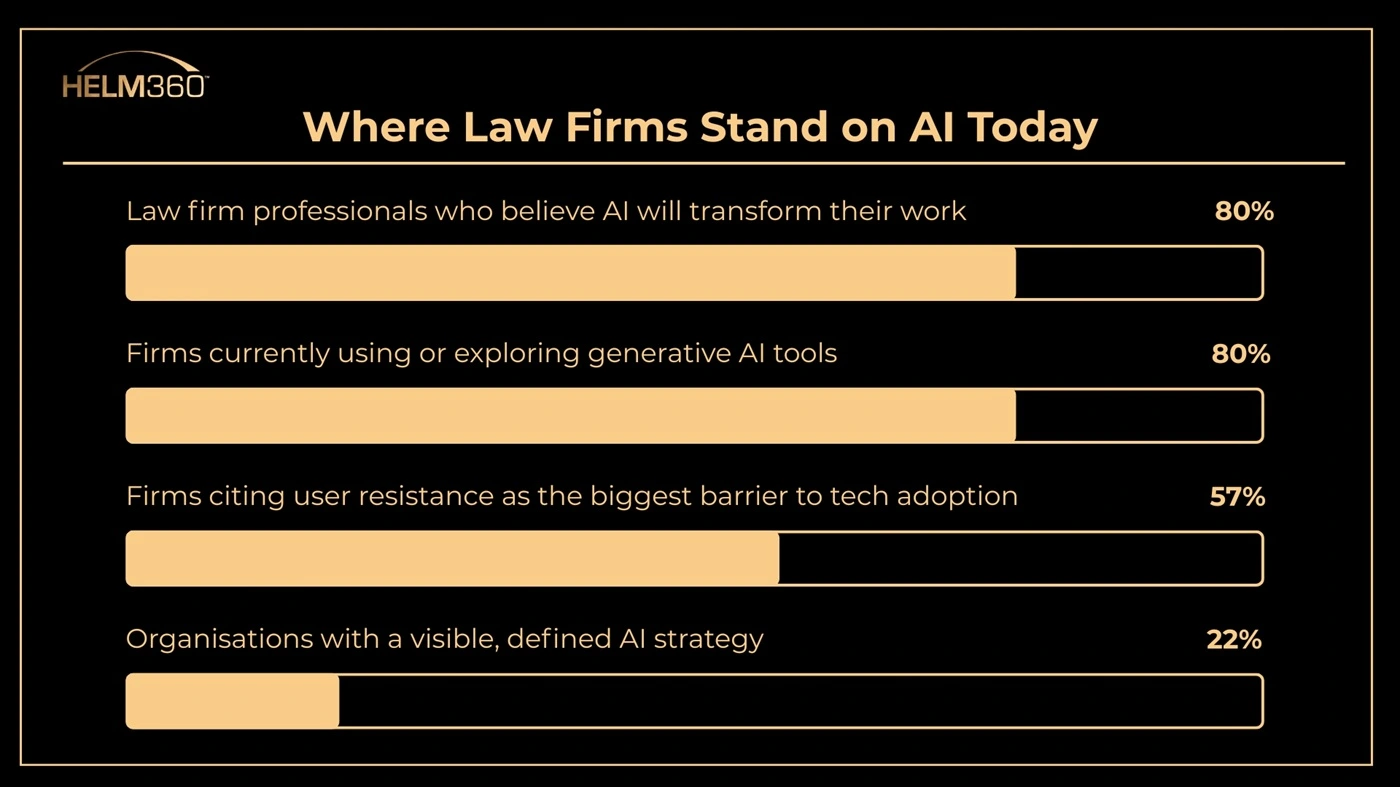
Law firm professionals are not just exploring AI anymore. They are using it every day, across practice areas, for real work. According to Thomson Reuters’ 2025 Generative AI in Professional Services Report, the share of legal organisations actively using AI nearly doubled in a single year, from 14% in 2024 to 26% in 2025.
The most common use cases firms are reporting right now include:
- Reviewing and summarizing documents and case records
- Legal research and case law analysis
- Drafting contracts, briefs, and client correspondence
- Contract analysis and due diligence support
- Time entry, billing preparation, and other administrative workflows
The adoption is there. What most firms are still working out is how to manage it responsibly. Firms with a clear AI strategy are 3.5 times more likely to see measurable benefits compared to those without one. Having the right tools is only part of the equation. How those tools are used, and who is accountable for the outputs, is what determines whether AI actually adds value to the firm or simply adds noise.
2. Cloud Optimization for Law Firms
- Lower IT maintenance overhead and reduced infrastructure costs
- Better disaster recovery and stronger business continuity
- Flexible access for fee earners working across multiple locations
- Easier integration between practice management, billing, and HR systems
- Faster deployment of security patches and compliance updates
3. Data Governance in Law Firms
- Auditing where client data lives across all active systems
- Establishing clear data retention and deletion policies
- Assigning accountability for data quality within the firm
- Ensuring cloud vendors meet the firm’s privacy and security standards
4. Business Intelligence for Law Firms
Business intelligence changes this by connecting the data that already exists across billing, finance, and operations into a single, readable view. Firms using it effectively are identifying underperforming practice areas earlier, catching invoices before they age into write-offs, and making partner-level decisions based on actual performance rather than perceived potential.
- Billing visibility: Know the status of every invoice without chasing reports across multiple systems
- Collections focus: See which clients need attention this week, not after a 60-day AR report surfaces the problem
- Client insight: Identify which clients are growing in spend and which are pulling back, while there is still time to act
- Cashflow forecasting: Move from spreadsheet estimates to projections grounded in real historical data
5. Cybersecurity as a Client Priority
- 66% of clients are hesitant to work with firms that use outdated technology
- 40% of clients would consider paying more for a firm with stronger cybersecurity
- Nearly 40% said they would consider ending the relationship after a breach
- 69% of clients prefer secure portals over email for sharing sensitive documents
6. Talent Strategy Alongside Technology
- Defining clear technology competencies for fee earners and support staff
- Building structured AI training programmes rather than ad-hoc guidance
- Creating dedicated roles that bridge law and technology within the firm
- Involving people in technology decisions, not just the end rollout