


How Law Firms Can Improve Collections with Better System Support
Where Collections Problems Actually Start
- Billing realization measures how much recorded billable work ultimately appears on an invoice. Losses may result from vague time entries, discretionary write-downs, or delays in time capture.
- Collection realization measures how much of the invoiced amount is ultimately paid. Collection losses may result from disputed charges, e-billing rejections, delayed follow-up, or invoices that lack a clearly assigned owner.
The Collections Workflow Gaps That Delay Cash
Upstream Billing Issues
- The problem: Delayed time entry, incomplete narratives, and pre-bill write-downs can reduce the amount of work that reaches the invoice in the first place.
- The result: When less billable work is invoiced, there is less revenue available for collection. Incomplete narratives or unclear billing information can also make it easier for clients to question charges later.
- The collections impact: These issues are generally managed within a firm’s financial or practice management system, but they can create downstream collection delays once the invoice is issued.
Invoice Quality and Billing Delays
- The problem: Outdated rates, incorrect fee arrangements, incomplete billing information, or matter details that were not updated after a scope change can create friction before an invoice is delivered.
- The result: Billing teams may need to make manual corrections, which slows invoice delivery and increases the risk of errors.
- The collections impact: An invoice that is delayed, inaccurate, or difficult for the client to understand is more likely to be questioned, rejected, or paid late. Better visibility into billing exceptions and invoice status helps teams identify issues earlier and move invoices through the process more efficiently.
E-Billing Rejections and Invoice Exceptions
- The problem: Many collection delays begin when an invoice is rejected or flagged by a client’s e-billing system because of a formatting, coding, rate, or compliance issue.
- The result: Each rejection can delay the payment cycle and add days or weeks to the accounts receivable process.
- The fix: Tracking e-billing submissions, rejections, invoice exceptions, and resubmissions in a centralized workflow helps teams identify problems sooner and move corrected invoices back into the payment cycle more quickly.
Limited Follow-Up Visibility and Ownership
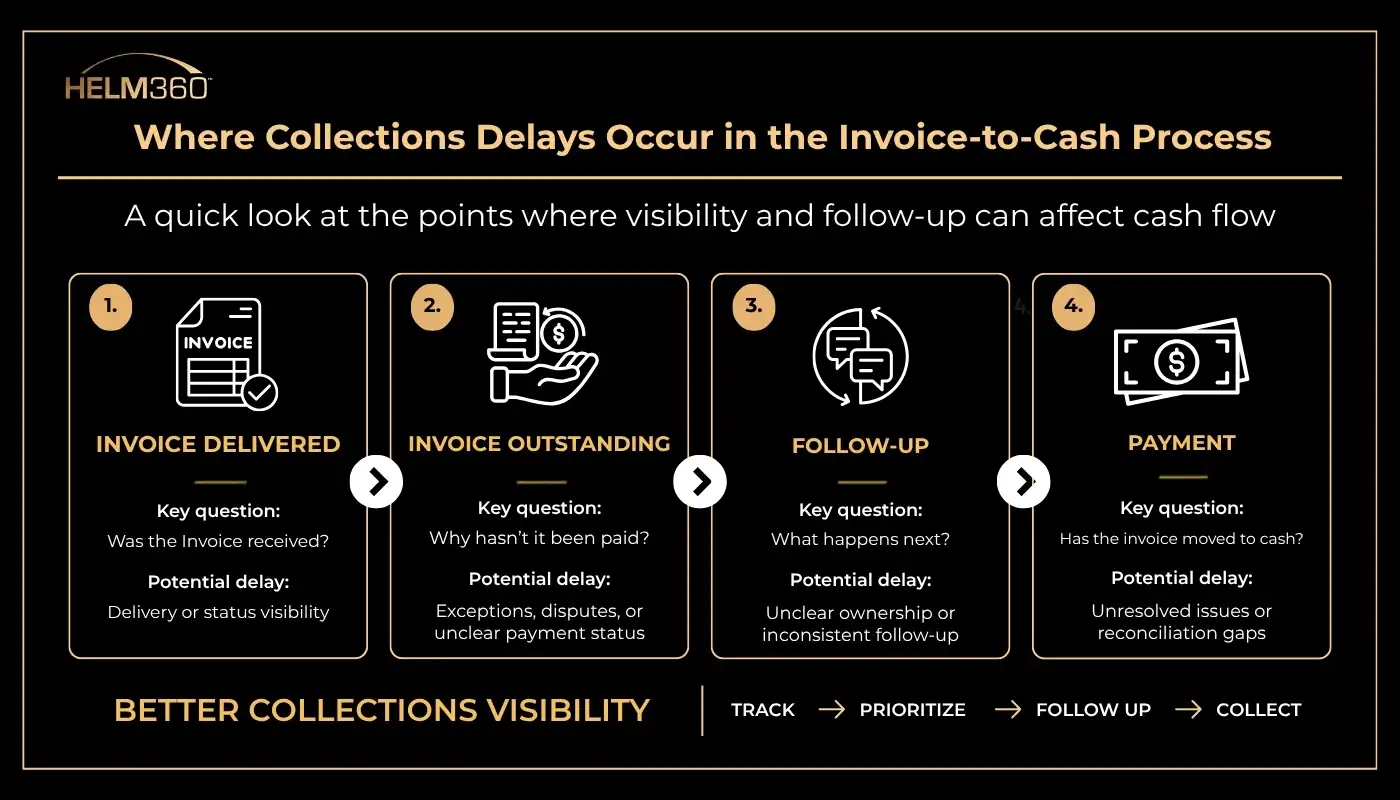
- The problem: Once an invoice becomes outstanding, collection activity may be managed through separate spreadsheets, email threads, and individual reminders. As a result, teams may not have a shared view of who owns the next action, why payment is delayed, or when escalation is required.
- The result: Follow-up becomes inconsistent, disputes can remain unresolved, and high-value or high-risk receivables may not receive attention at the right time.
- The fix: A centralized collections workflow gives finance teams visibility into invoice status, communication history, assigned actions, disputes, payment updates, and next steps. With this information in one system, teams can prioritize receivables, automate appropriate reminders, and follow up more consistently. Oddr is designed to connect these activities across the invoice-to-cash process.
How Collections Workflow Support Translates to Faster Cash
- Unified collections visibility: A dedicated AI-powered platform like Oddr centralizes invoice delivery, tracking, and collections into one system, automating outreach and giving finance teams real-time visibility into exactly where every bill sits, from delivery through reconciliation, without manual chasing.
- Shorter approval paths: Faster invoice follow-up: Centralizing invoice status, exceptions, client communication, and next actions helps finance teams identify delays and move outstanding invoices through the collections process more efficiently.
Practical Steps to Strengthen System Support for Collections
- Review your AR aging data. Identify where invoices tend to stall and which aging periods create the greatest revenue risk.
- Define clear ownership for collection follow-up. Every outstanding invoice should have visibility into who is responsible for the next action.
- Standardize follow-up processes. Create a consistent approach for reminders, escalation, dispute tracking, and promises to pay.
- Centralize collection activity. Keep invoice history, communication records, and next steps accessible to the people responsible for collections.
- Prioritize high-risk receivables. Focus attention based on aging, invoice value, client history, and other indicators relevant to the firm’s collection strategy.
The Role of Ongoing System Support in Sustained Collections Health
Moving Forward
If your firm is looking to improve visibility into outstanding receivables and bring more structure to its collections process, Helm360’s team can help you evaluate your current processes and identify practical opportunities to improve collections performance.
Frequently Asked Questions
Better collections processes give firms greater visibility into outstanding receivables, clarify ownership, and support consistent follow-up. Without a structured process, delayed follow-up, fragmented collection activity, and limited visibility can all reduce how effectively billed work converts to cash.
Billing realization measures how much recorded time actually appears on a client invoice. Collection realization measures how much of that invoiced amount is actually paid. A firm can have strong billing realization and still lose revenue at the collection stage if invoices are inaccurate, non-compliant, or followed up on too late.
A good realization rate depends on the firm’s practice, clients, billing processes, and collection performance. Industry benchmarks can provide a useful reference point, but firms should also compare their current realization and collection rates with their own historical performance.
Both matter, but collection performance is also influenced by what happens after an invoice is issued. Limited visibility, inconsistent follow-up, unclear ownership, and fragmented collection activity can all delay payment independently of how a client relationship is managed.
Collections processes should be reviewed on an ongoing basis rather than only when accounts become significantly overdue. Client payment patterns, collection priorities, and staffing can change over time, so periodic reviews can help firms maintain consistent follow-up and visibility into outstanding receivables.
Most e-billing rejections happen because of LEDES code errors, unapproved timekeeper rates, or entries that violate a client’s outside counsel guidelines. Building compliance checks into the pre-submission workflow can help catch these issues before the invoice is sent and prevent the delays a rejection can cause.
Helm360 helps law firms optimize billing and collections processes across platforms such as Elite 3E, Aderant, and ProLaw. Its Billing Support Services can also provide additional support for firms managing billing backlogs or looking to improve their revenue cycle processes.