


3 Legal Tech Experts on What Law Firms Overlook in Legal Tech Transformation

A law firm can select the right platform, complete the migration on schedule, and still wonder why nothing feels fundamentally different six months later. The invoices still take too long. The data still needs cleaning. Teams still rely on spreadsheets. The problem is rarely the software choice alone. It is everything the firm did, or did not address, before and after the system went live.
Across conversations on Helm360’s The Legal Helm, David Langdon, Mark Dorman, and Marie-Claire Le Houerou highlight a recurring challenge in legal technology transformation: technology succeeds when firms plan for the business change around it, not just the implementation.
1. David Langdon: Buy technology to solve a business problem, not a feature list
Legal technology decisions often begin with a familiar trigger: a system is nearing end of life, a vendor is retiring support, or leadership has seen a compelling demonstration. Those are valid reasons to explore change, but they are not, on their own, a transformation strategy.
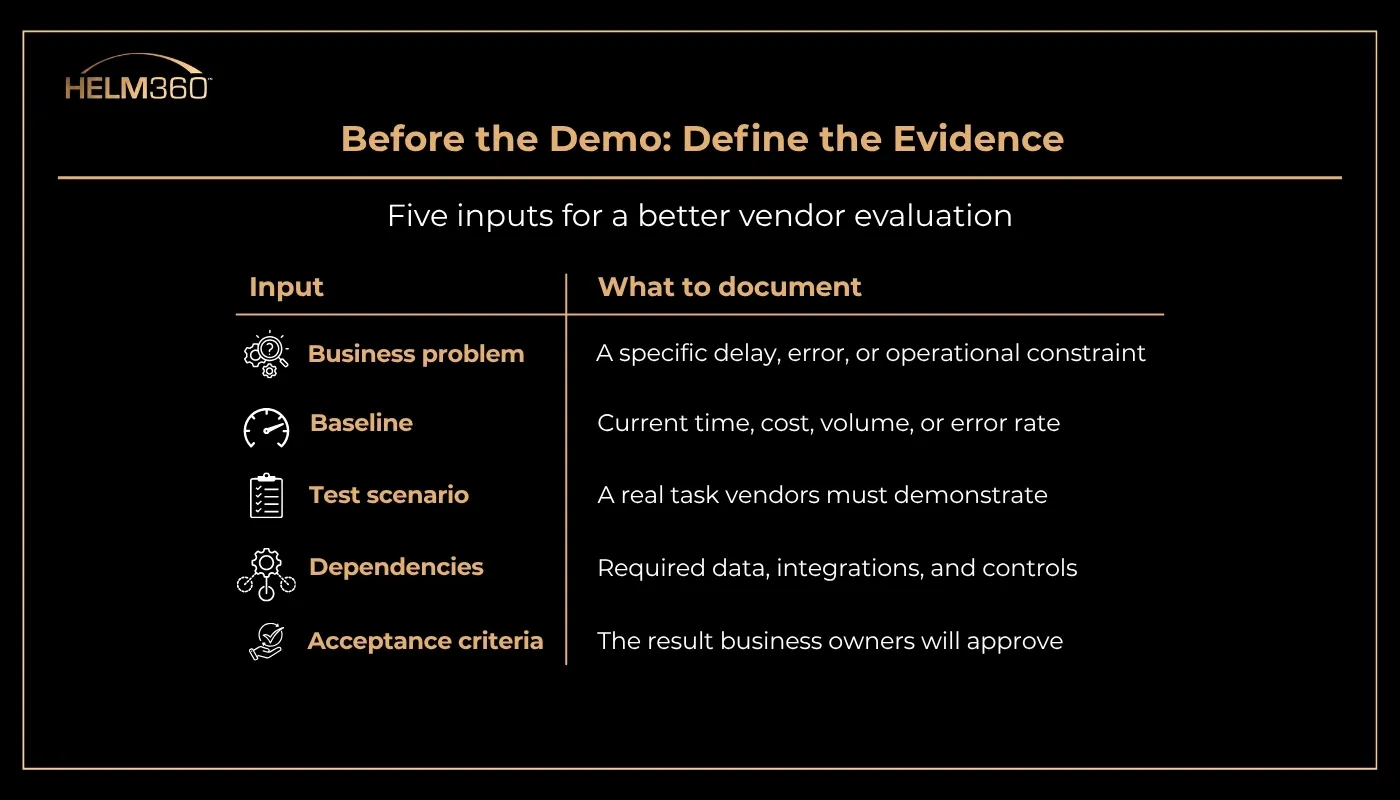
David Langdon, founder of Blind Spot Consulting, shared that firms often focus too heavily on product features when evaluating legal technology. In Episode 43, The Blind Spots in Legal Tech: Lessons from 30 Years of Transformation, he challenges the practice of comparing lengthy feature checklists before establishing what the firm actually needs. He recommends starting with a broader assessment of the firm’s technology environment, its operational requirements, and the problems a new system is expected to solve.
Problem: feature-led selection
A firm may evaluate a finance, practice management, or intake platform by comparing hundreds of capabilities. This can create a false sense of confidence. A system with many features may still be difficult to adopt, integrate, or support.
Langdon’s advice is direct: avoid treating technology selection as a checkbox exercise. Instead, start with the firm’s actual operating challenges.
- Why is the current system no longer fit for purpose?
- Which workflows create delay, rework, or risk?
- Which teams are affected, and how do their needs differ?
- What data, reporting, and integrations must work from day one?
- What outcome would justify the investment?
Solution: assess the operating environment first
Before shortlisting vendors, firms benefit from assessing the entire environment, not only the system being replaced. That includes finance, HR, document management, e-billing, conflicts, intake, CRM, and reporting tools.
This approach also helps firms decide what legacy data to migrate, what to archive, and what to leave behind. Langdon also cautions against overcomplicating a new implementation with unnecessary features and customizations. His advice is to establish the system’s core functionality first, allow users time to adopt it, and review its performance before deciding which additional changes are necessary.
2. Mark Dorman: Treat technology as the enabler of business transformation
Mark Dorman, CEO of Elite, offers a useful distinction in The Strategy Behind Modern Legal Transformation: firms may want to buy more technology without fundamentally changing how they operate. Real transformation, he explains, starts with the value the firm needs to protect and deliver, then uses technology as the enabler.
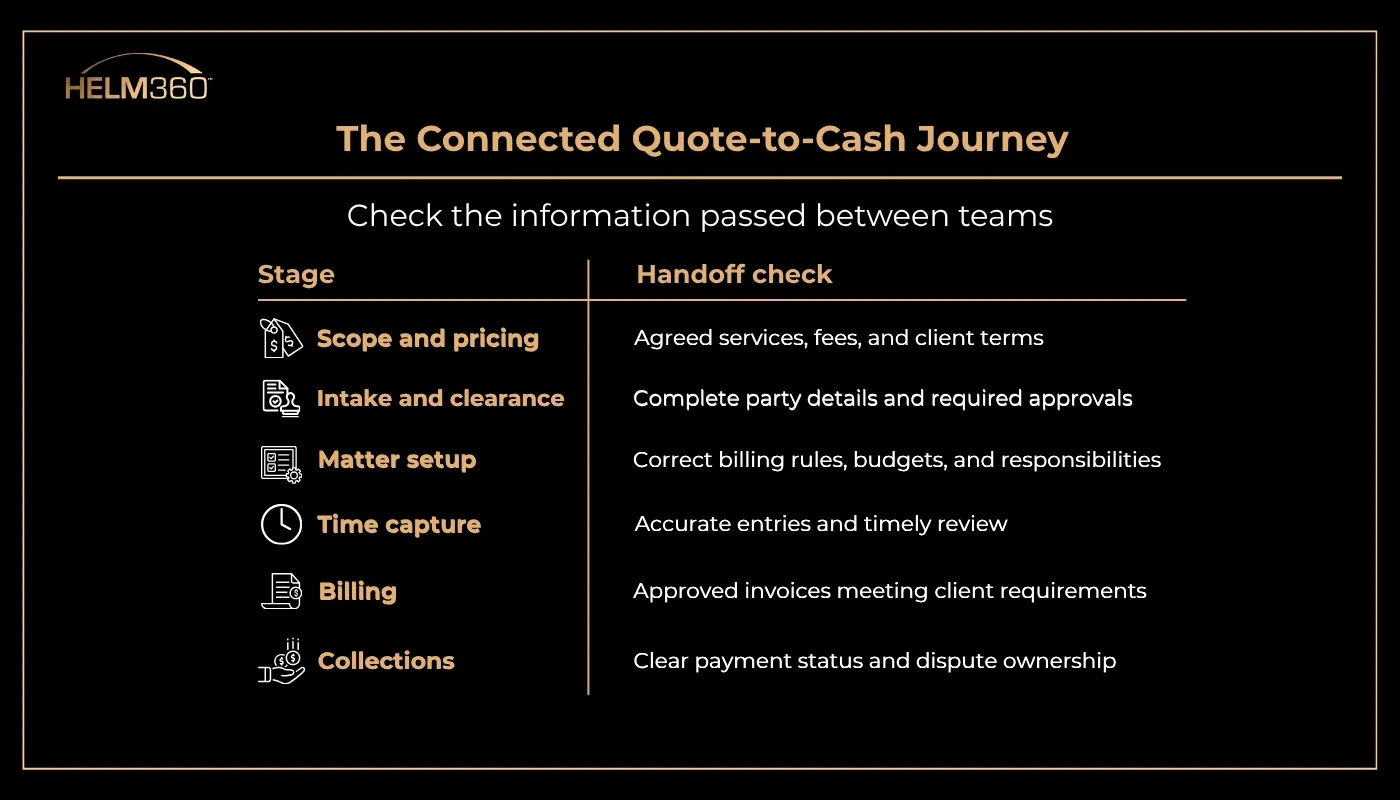
That distinction matters because legal work is increasingly dependent on connected data and end-to-end workflows. A new billing platform, for example, may improve invoice creation, but its value is limited if matter setup, time capture, budgets, approvals, client billing guidelines, and collections remain disconnected.
Problem: point solutions create new complexity
AI has intensified this challenge. Dorman observes that AI does not necessarily cause fragmentation, but it exposes it. When data is scattered across systems and tools are bolted on outside the workflow, firms struggle to demonstrate return on investment.
The issue is not that firms lack technology. It is that technology is often introduced without a platform-level view of the process.
Solution: modernize the workflow, not just the tool
Firms that achieve durable results tend to think in terms of complete workflows:
- Client intake and conflicts
- Matter opening and budgeting
- Time capture and work-in-progress review
- Billing, e-billing, and collections
- Reporting, profitability analysis, and decision support
This does not require a single vendor for every function. It does require intentional integration, consistent data definitions, and a clear operating model. Dorman also emphasizes an iterative approach: cloud and modern platforms give firms a foundation to improve workflows progressively rather than attempting a high-risk, all-at-once replacement.
Broader industry data also illustrates the shift toward cloud-based legal technology, alongside the organizational challenges that can affect adoption. According to ILTA’s 2025 Technology Survey executive summary, 88% of responding firms described their cloud philosophy as either “mostly in the cloud” (45%) or “cloud with every upgrade” (43%). The survey also identified resistance to change as the leading hurdle to adopting emerging technology, cited by 57% of respondents, followed by security and risk at 54%.
3. Marie-Claire Le Houerou: Connect processes, teams, and stakeholders
Marie-Claire Le Houerou, Senior Client Experience Director at Intapp, brings an operational perspective to the discussion. In Episode 35, Transforming Legal Operations, Compliance, and the Quote-to-Cash Journey, she explains how fragmented handoffs between business development, intake, compliance, billing, and collections can cause information to be lost or requested repeatedly. These disconnected processes can consume fee-earner time and affect the client experience.
Problem: the process is invisible
When each team optimizes its own step, the end-to-end process can become inefficient even if every individual team is working hard. Le Houerou recommends mapping the current process across every team involved, including partners, secretaries, intake, conflicts, AML, billing, and collections.
A process map makes the handoffs visible. It shows where information is duplicated, where approvals stall, and where clients are asked for details the firm already holds.
Solution: design the future state with the people who use it
Her experience illustrates the value of leadership support, cross-team collaboration, and involving the people who manage processes day to day. Turn the process map into an agreed future workflow, with clear responsibilities at each handoff. To apply these principles, firms should:
- Map the current workflow across departments and systems.
- Identify pain points such as repeated data entry, unclear ownership, and delayed approvals.
- Define the future workflow around collecting accurate information the first time.
- Involve operational users in design, testing, and rollout decisions.
- Use system controls to create visibility, audit trails, and accountability.
This is especially relevant to quote-to-cash transformation. Better intake data supports more accurate conflicts and compliance checks. Cleaner matter data supports accurate billing. Connected billing and collections workflows help firms reduce leakage and improve cash flow.
A practical checklist for law firm leaders
Before approving the next major legal technology initiative, ask:
- Have we defined the business outcome in measurable terms?
- Have we mapped the current process across all affected teams?
- Have we assessed integrations, data quality, and reporting needs across the full technology stack?
- Are frontline users involved in requirements, design, testing, and rollout?
- Is change management funded and owned from the start?
- Do executives understand the operational impact on each stakeholder group?
- Will we measure adoption and business value after go-live, not just implementation milestones?
These questions do not slow transformation down. They reduce the risk of building technically sound systems around processes that no longer serve the firm.
Work with a partner focused on operational outcomes
Helm360 works alongside legal and professional services firms to align technology, data, workflows, and adoption with measurable business outcomes. If your firm is planning a platform upgrade, improving quote-to-cash operations, or seeking better visibility across its technology environment, contact Helm360 to discuss a practical, outcome-focused approach. You can also explore more expert perspectives on The Legal Helm podcast.
Frequently Asked Questions
1. What do law firms most often overlook in legal tech transformation?
Law firms often overlook clear business objectives, end-to-end process design, data quality, integrations, and change management. They may focus heavily on software features while giving less attention to how the technology will change daily workflows.
2. Why do legal technology projects fail despite successful implementation?
A project can go live on time and within budget but still fail to deliver value if users do not adopt the new process. Without adoption, expected benefits such as faster billing, better reporting, or reduced manual work may not materialize.
3. How should law firms choose legal technology?
Firms should begin with the business problem, map current workflows, define measurable success criteria, and assess integration and data requirements. Vendor evaluation should consider support, roadmap, scalability, security, and fit with the firm’s existing systems.
4. What is the difference between technology transformation and digital transformation?
Technology transformation focuses on implementing or upgrading systems. Digital or business transformation changes how the firm operates, using technology to improve workflows, decision-making, client service, and operational performance.
5. Why is change management important in legal technology?
Change management helps users understand why a change is happening, how it affects their role, and how to work effectively in the new environment. It is essential for adoption, especially in law firms where professionals have limited non-billable time and established working habits.
6. How can law firms improve adoption of new legal technology?
Firms can improve adoption by securing executive sponsorship, involving frontline users early, communicating the business case, providing role-based training, identifying credible change champions, and measuring usage and outcomes after go-live.
7. What is quote-to-cash transformation in a law firm?
Quote-to-cash transformation improves the connected workflow from client intake, conflicts, and matter setup through time capture, billing, collections, and financial reporting. The goal is to reduce friction, improve data accuracy, accelerate cash collection, and enhance the client experience.
8. How does data quality affect legal technology success?
Data quality affects conflicts checks, compliance, matter setup, billing accuracy, reporting, and AI performance. Inaccurate or incomplete data creates rework, delays, risk, and unreliable insights.
9. Should law firms migrate all legacy data to a new system?
Not necessarily. Decide what to migrate or archive based on operational needs, retention requirements, legal holds, client obligations, and retrieval needs. Validate archived records for completeness, security, and accessibility.
10. How can law firms measure the ROI of legal technology?
Measure ROI against the original business case. Examples include shorter billing cycles, fewer intake exceptions, improved collections, higher data completeness, reduced manual effort, faster reporting, and increased system adoption across relevant user groups.